


Terms and Conditions

Alcamena Website Terms and Disclaimers:

Terms and Conditions

  1. Acceptance of Terms

By accessing and using the Alcamena website (“Site”), you agree to be bound by these Terms and Conditions (“Terms”). If you do not agree, please discontinue use immediately.

  1. Purpose of the Site

The Site provides information about Alcamena, its PepGenesis™ platform, research programs, and corporate initiatives. Content is for informational purposes only and does not constitute medical, legal, or investment advice.

  1. Intellectual Property
  • All content, including text, graphics, logos, icons, images, and software, is the property of Alcamena or its licensors.
  • You may not copy, reproduce, distribute, or create derivative works without prior written consent.
  • Trademarks such as PepGenesis™ are proprietary and protected under applicable law.
  1. Use of Information
  • You may view, download, or print materials for personal, non-commercial use only.
  • Any unauthorized use may result in termination of access and potential legal action.
  1. No Medical Advice
  • The Site may reference scientific research, therapeutic areas, or clinical programs.
  • This information is not intended to replace professional medical consultation.
  • Always seek advice from qualified healthcare providers regarding medical conditions or treatments.
  1. Investigational Products Disclaimer
  • Pipeline assets and programs described on the Site are investigational and have not been approved by the U.S. Food and Drug Administration (FDA), European Medicines Agency (EMA), or any other regulatory authority.
  • Safety and efficacy have not been established outside of controlled clinical trials.
  • Nothing on the Site should be construed as a promotion or solicitation for unapproved products.
  1. Third-Party Links
  • The Site may contain links to third-party websites.
  • Alcamena is not responsible for the content, accuracy, or practices of external sites.
  • Accessing third-party links is at your own risk.
  1. Privacy
  • Use of the Site is subject to Alcamena’s Privacy Policy, which explains how data may be collected and used.
  • By using the Site, you consent to the practices described in the Privacy Policy.
  1. Disclaimers
  • The Site is provided “as is” without warranties of any kind, express or implied.
  • Alcamena does not guarantee that the Site will be error-free, uninterrupted, or free of harmful components.
  • Alcamena disclaims liability for reliance on Site content.
  • Forward-Looking Statements: Certain statements may be forward-looking and involve risks and uncertainties. Actual results may differ materially. Alcamena undertakes no obligation to update such statements.
  1. Limitation of Liability
  • To the fullest extent permitted by law, Alcamena shall not be liable for damages arising from use of the Site, including indirect, incidental, or consequential damages.
  • This includes damages related to reliance on information, loss of data, or inability to access the Site.
  1. Indemnification

You agree to indemnify and hold harmless Alcamena, its affiliates, officers, and employees from claims, liabilities, or expenses arising from your use of the Site or violation of these Terms.

  1. Governing Law

These Terms are governed by and construed under the laws of the State of New Jersey, United States, without regard to conflict of law principles.

  1. Changes to Terms

Alcamena reserves the right to update or modify these Terms at any time. Changes will be posted on this page with an updated “Last Revised” date. Continued use of the Site constitutes acceptance of revised Terms.

  1. Contact Information

For questions about these Terms, please contact: 
Alcamena Stem Cell Therapeutics, LLC
1450 South Rolling Road, Suite 4.069
Baltimore MD, 21227-3867
Email: info@alcastem.com

Forward-Looking Statements

This website may contain forward-looking statements within the meaning of applicable securities laws. These statements are based on Alcamena’s current expectations, forecasts, and assumptions and involve risks and uncertainties that could cause actual outcomes to differ materially from those expressed or implied.

Forward-looking statements may include, but are not limited to:

  • Development plans for the PepGenesis™ platform and other investigational programs
  • Anticipated clinical trial designs, timelines, and regulatory submissions
  • Potential therapeutic benefits, safety, or efficacy of investigational assets
  • Strategic partnerships, collaborations, or business development initiatives
  • Financial projections, operational milestones, and future growth opportunities

Such statements are subject to risks and uncertainties, including scientific, regulatory, operational, and market factors. Actual results may differ materially due to risks inherent in drug development, regulatory review processes, manufacturing, commercialization, and other factors beyond Alcamena’s control.

Alcamena undertakes no obligation to update or revise forward-looking statements, whether as a result of new information, future events, or otherwise, except as required by law.

Clinical Trial Information Disclaimer

Information regarding clinical trials provided on this Site is intended for general informational purposes only.

  • Clinical trial listings may not be comprehensive or up to date.
  • Participation in any clinical trial is subject to eligibility criteria, informed consent, and approval by regulatory and ethical review boards.
  • Nothing on this Site should be construed as a solicitation to participate in a clinical trial.
  • Individuals interested in clinical trials should consult with qualified healthcare providers and review official trial registries (e.g., ClinicalTrials.gov) for authoritative information.

“Privacy Policy” 

Here’s a unified Privacy Policy for Alcamena’s website, now including a HIPAA-specific disclaimer to clarify that no Protected Health Information (PHI) is collected or stored. This version is comprehensive and harmonized for biotech corporate use:
ASCT-83 (CTDSP1:REST Antagonist)

CTDSP1: C-terminal domain small phosphatase 1; REST: RE1 silencing transcription factor

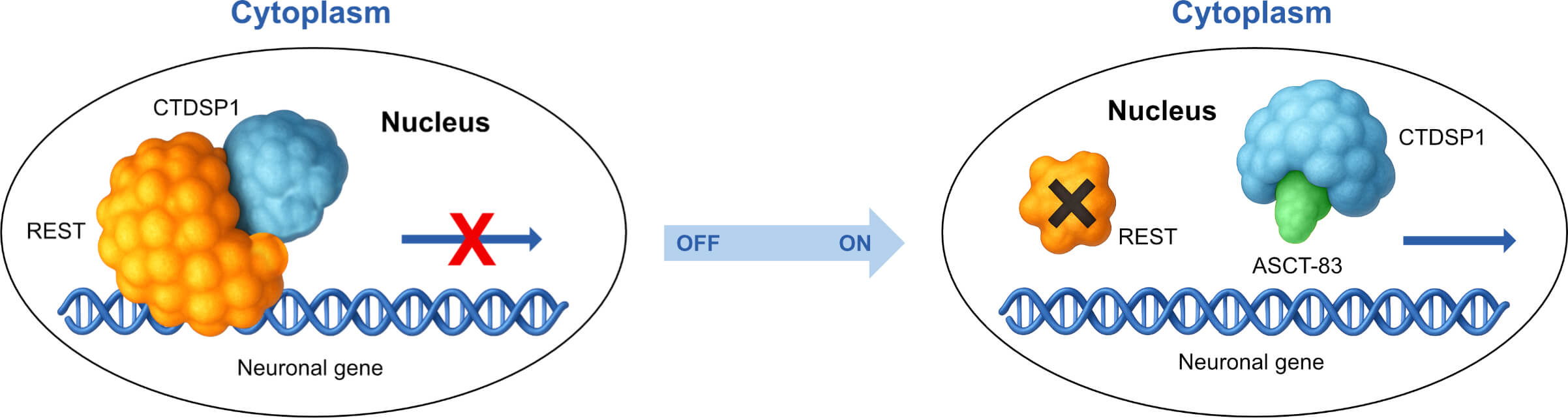
ASCT-83 is a clinical stage first-in-class drug that antagonizes CTDSP1 and REST, which repress neuronal genes1. Prior to ASCT-83, CTDSP1 and REST were considered undruggable because they lack adequate binding pockets for small molecules and are localized in the nucleus, making them inaccessible to antibodies. CTDSP1 and REST are absent or only express at low levels in neurons and pancreatic beta cells (functionally similar to neurons). However, sugary and processed foods, or nerve injury can result in excessive expression in these tissues. High expression levels cause dysglycemia, neuropathy, and in the case in traumatic nerve and brain injury, an incomplete recovery. Additionally, brain cancers, like glioblastoma, have high CTDSP1 and REST levels. The published literature and our data strongly support that antagonizing CTDSP1 and REST improves the outcome of metabolic disorders, nerve injury, and brain cancer2-7.

Important for safety, most REST targets are transcriptionally unresponsive, because the basal organization of chromatin does not permit the epigenetic “writing” of a new set of instructions. However, ASCT-83 mediated-interference of REST chromatin binding in injured or diseased cells permits the re-establishment of durable chromatin state, restoring normal gene expression, thereby addressing the underlying cause of metabolic and/or neurologic symptoms, with a low potential for side effects.

Alcamena has received a “may proceed” letter from the Food and Drug Administration (FDA) to conduct a single and multiple ascending dose study in health human subjects to assess the tolerability and pharmacokinetics of ASCT-83 following daily subcutaneous administration.

Scientific references:

  1. Nesti, E., Corson, G. M., McCleskey, M., Oyer, J. A. & Mandel, G. C-terminal domain small phosphatase 1 and MAP kinase reciprocally control REST stability and neuronal differentiation. Proc Natl Acad Sci U S A 111, E3929-3936 (2014). https://doi.org/10.1073/pnas.1414770111 [pii]10.1073/pnas.1414770111
  2. Uchida, H., Ma, L. & Ueda, H. Epigenetic Gene Silencing Underlies C-Fiber Dysfunctions in Neuropathic Pain. Journal of Neuroscience 30, 4806-4814 (2010). https://doi.org/10.1523/JNEUROSCI.5541-09.2010
  3. Zhang, F. et al. Repressor element 1-silencing transcription factor drives the development of chronic pain states. Pain (2019). https://doi.org/10.1097/j.pain.0000000000001633
  4. Zhang, J., Chen, S. R., Chen, H. & Pan, H. L. RE1-silencing transcription factor controls the acute-to-chronic neuropathic pain transition and Chrm2 receptor gene expression in primary sensory neurons. J Biol Chem 293, 19078-19091 (2018). https://doi.org/10.1074/jbc.RA118.005846
  5. Ueda, H. et al. A mimetic of the mSin3-binding helix of NRSF/REST ameliorates abnormal pain behavior in chronic pain models. Bioorg Med Chem Lett 27, 4705-4709 (2017). https://doi.org/10.1016/j.bmcl.2017.09.006
  6. Conti, L. et al. REST controls self-renewal and tumorigenic competence of human glioblastoma cells. PLoS One 7, e38486 (2012). https://doi.org/10.1371/journal.pone.0038486
  7. Zhang, Y. et al. Comprehensive Analysis of REST/NRSF Gene in Glioma and Its ceRNA Network Identification. Front Med (Lausanne) 8, 739624 (2021). https://doi.org/10.3389/fmed.2021.739624
  8. Martin, D. & Grapin-Botton, A. The Importance of REST for Development and Function of Beta Cells. Front Cell Dev Biol 5, 12 (2017). https://doi.org/10.3389/fcell.2017.00012

ASCT-83 for Obesity & Early T2D​

We target the CTDSP1:REST pathway to unlock the body’s production of BDNF, a potent natural appetite suppressant9, 10.

Obesity & Early T2D​

Appetite Suppressant / Weight loss​
Up to 3x BDNF
28% appetite
9% weight
BDNF 72 h / appetite & weight 1-month​
Model: BDNF human mesenchymal stem cells / appetite & weight in GLP dog study (daily SC administration at human relevant doses) ​

Scientific references:

  1. Xu, B. et al. Brain-derived neurotrophic factor regulates energy balance downstream of melanocortin-4 receptor. Nat Neurosci 6, 736-742 (2003). https://doi.org/10.1038/nn1073
  2. Zuccato, C. et al. Huntingtin interacts with REST/NRSF to modulate the transcription of NRSE-controlled neuronal genes. Nat Genet 35, 76-83 (2003). https://doi.org/10.1038/ng1219​

Treating the Root Cause of Nerve Injury​

Current treatments fail to address the underlying injury-induced repression of neuronal genes by the CTDSP1:REST pathway11-14. ASCT-83 is designed to reverse this repression.​

Neuropathic Pain​

Rapid Pain Reduction​
Up to 70%
In just 1 Week​
Model: Rat spared nerve injury (mechanical & thermal pain)​

Peripheral Nerve Injury​

Motor Function Recovery​
Full Recovery​
In 4 Weeks​
Model: Rat sciatic nerve transection (restored from 40% deficit) ​

Scientific references:

  1. Uchida, H., Ma, L. & Ueda, H. Epigenetic Gene Silencing Underlies C-Fiber Dysfunctions in Neuropathic Pain. Journal of Neuroscience 30, 4806-4814 (2010). https://doi.org/10.1523/JNEUROSCI.5541-09.2010​
  2. Ueda, H. et al. A mimetic of the mSin3-binding helix of NRSF/REST ameliorates abnormal pain behavior in chronic pain models. Bioorg Med Chem Lett 27, 4705-4709 (2017). https://doi.org/10.1016/j.bmcl.2017.09.006​
  3. Zhang, J., Chen, S. R., Chen, H. & Pan, H. L. RE1-silencing transcription factor controls the acute-to-chronic neuropathic pain transition and Chrm2 receptor gene expression in primary sensory neurons. J Biol Chem 293, 19078-19091 (2018). https://doi.org/10.1074/jbc.RA118.005846​
  4. Xiao-Die, X. et al. Increased NRSF/REST in anterior cingulate cortex contributes to diabetes-related neuropathic pain. Biochem Biophys Res Commun 527, 785-790 (2020). https://doi.org/10.1016/j.bbrc.2020.04.106

ASCT-83 for Ischemic Stroke and Traumatic Brain injury (TBI)​

Blocking REST after injury is neuroprotective, prevents brain death, and improves cognitive function​15-19.

Ischemic Stroke & TBI​

60% less brain death
2x anxiety
2x cognitive function​
Brain death at 24 h; anxiety and cognitive function after two weeks of daily treatment at clinically relevant doses followed by a two-week dose free period.​
Model: ​ Brain death assessed in cultured hippocampi glutamate excitotoxicity assay; ​
 anxiety and cognitive function assessed in a controlled cortical impact rat TBI study​

Scientific references:

  1. Noh, K. M. et al. Repressor element-1 silencing transcription factor (REST)-dependent epigenetic remodeling is critical to ischemia-induced neuronal death. Proc Natl Acad Sci U S A 109, E962-971 (2012). https://doi.org/1121568109 [pii]10.1073/pnas.1121568109​
  2. Calderone, A. et al. Ischemic insults derepress the gene silencer REST in neurons destined to die. J Neurosci 23, 2112-2121 (2003). https://doi.org/23/6/2112 [pii]​
  3. Morris-Blanco, K. C. et al. Inhibition of the Epigenetic Regulator REST Ameliorates Ischemic Brain Injury. Mol Neurobiol 56, 2542-2550 (2019). https://doi.org/10.1007/s12035-018-1254-y​
  4. Cheng, Y. et al. Transcription factor network analysis identifies REST/NRSF as an intrinsic regulator of CNS regeneration in mice. Nat Commun 13, 4418 (2022). https://doi.org/10.1038/s41467-022-31960-7​
  5. Liang, H. M. et al. By up-regulating mu- and delta-opioid receptors, neuron-restrictive silencer factor knockdown promotes neurological recovery after ischemia. Oncotarget 8, 101012-101025 (2017). https://doi.org/10.18632/oncotarget.18195

ASCT-83 for Huntington’s Disease​

ASCT-83 reverses the repression of neuronal genes by blocking REST, allowing them to express normally in Huntington’s disease20.
ASCT-83 eliminates nuclear REST​
48 hours post dose​
Model: HEK293 cells administered 500 to 1000 nM of ASCT-83 ​

Scientific references:

  1. Zuccato, C. et al. Widespread disruption of repressor element-1 silencing transcription factor/neuron-restrictive silencer factor occupancy at its target genes in Huntington’s disease. J Neurosci 27, 6972-6983 (2007). https://doi.org/10.1523/JNEUROSCI.4278-06.2007

ASCT-83 for Brain Cancer ​

In brain cancers REST acts as an oncogene by driving cancer progression1. Blocking REST induces cancer cell death and prevents cancer proliferation and migration21.
ASCT-83 kills glioblastoma cells (GBM)
ASCT-83 alone: 85% GBM cell death
ASCT-83 + Temozolomide (TMZ): 100% GBM cell death
ASCT-83 + TMZ: 75% TMZ resistant GBM cell death
Over 4 to 7 weeks​
Model: GBM U87 and GBM temozolomide resistant U251 cells using clinically relevant doses​

Scientific references:

  1. Kamal, M. M. et al. REST regulates oncogenic properties of glioblastoma stem cells. Stem Cells 30, 405-414 (2012). https://doi.org/10.1002/stem.1020
  2. Conti, L. et al. REST controls self-renewal and tumorigenic competence of human glioblastoma cells. PLoS One 7, e38486 (2012). https://doi.org/10.1371/journal.pone.0038486

ASCT-1 (Permeability Enhancer)

ASCT-1 (Permeability Enhancer)

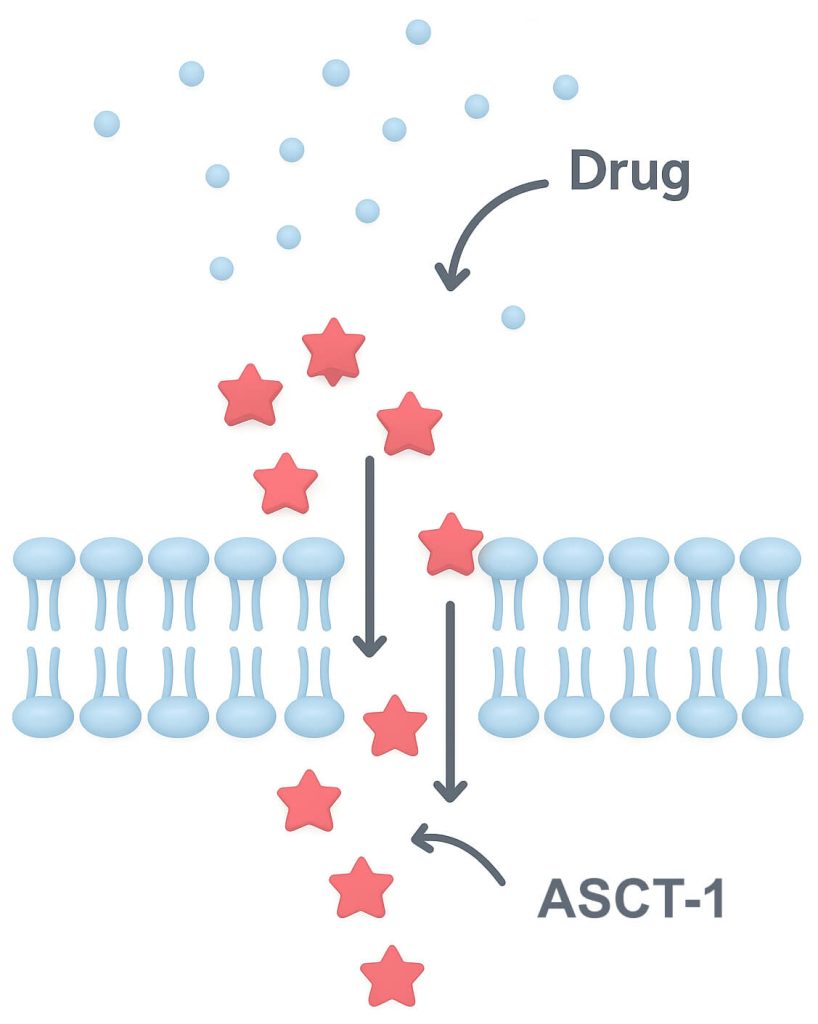
Mechanism: ASCT-1 is engineered to optimize the delivery of small molecules, peptides, antibodies and oligonucleotides.

With high membrane affinity and efficient membrane permeability, it acts as a “molecular doorman”,  facilitating transmembrane passage and improving systemic uptake.

ASCT-1 is designed to improve drug cell and nuclear permeability and overall bioavailability.​

ASCT-1 enhanced antagonist (ASCT-456) efficacy against its nuclear-localized target REST: ​

Increased ASCT-456 REST antagonist activity from 64% to 100%

Increases ASCT-456-induced U87 GBM cell death from 63% to 100%.

Increases ASCT-456-induced U251-TMZ resistant GBM cell death from 0 to 76%

ASCT-1 exhibits no off-target effect on its own.​

48 hours post dose​
Model: HEK293, U87, and U256 cells using clinically relevant doses. ​

ASCT-1124 (IL-6 Antagonist)

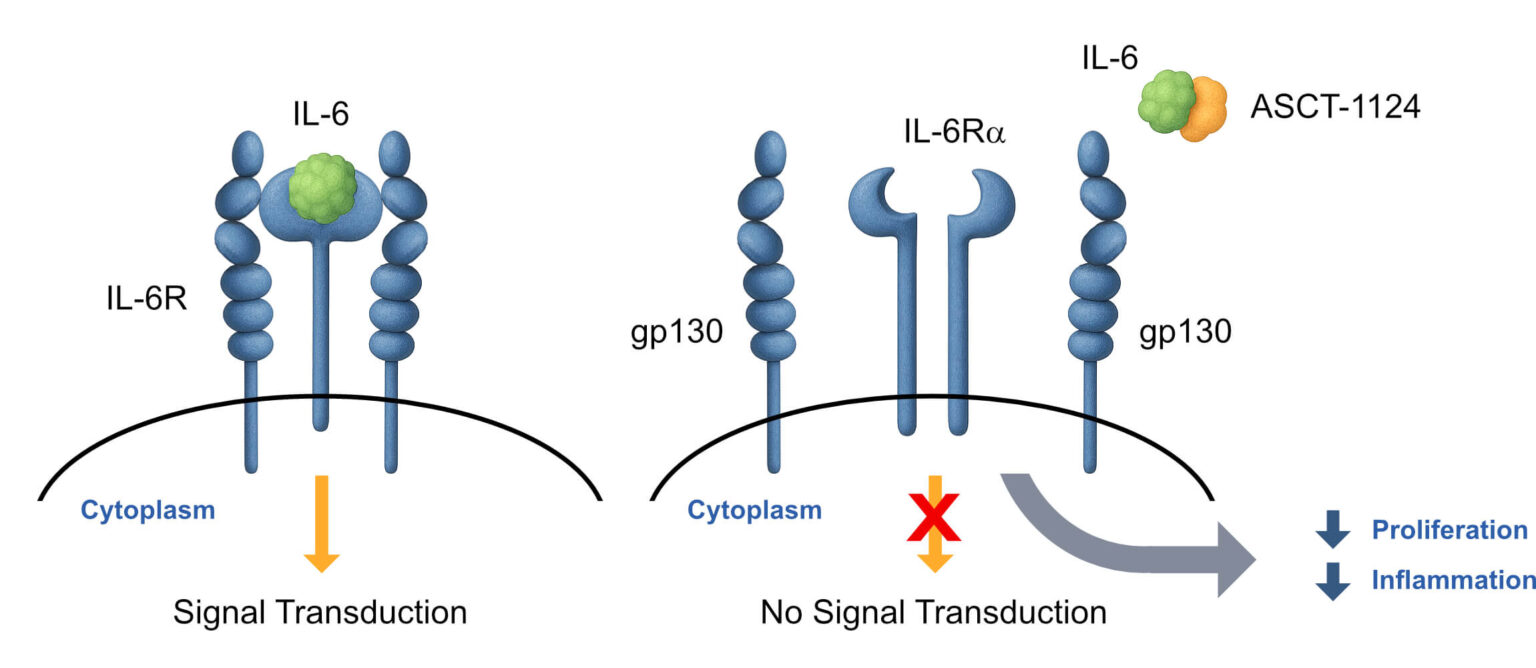
Mechanism: A first-in-class topical peptide that binds directly to IL-6, blocking proliferation and inflammation signals. This offers a localized treatment, minimizing systemic side effects.​

ASCT-1124: Reduction and Prevention of Keloid / Hypertrophic Scars ​

ASCT-1124 is a topical peptide that delivers biologic-level potency directly only to the disease site, avoiding systemic toxicity.​

ASCT-1124 dose-dependently decreases proliferation of skin cells (keratinocytes) from 140% with IL-6 alone to zero in the presence of ASCT-1124.

40% reduction in skin thickness, 60% reduction in serum IL-6, and 75% reduction in serum IFN-γ in a humanized IMQ mouse model.​

Keratinocytes 12 hours post dose; humanized mice every 12 hours for 7 days.​
Model: Keratinocytes and imiquimod (IMQ)-induced humanize mouse model using clinically relevant doses. ​

ASCT-1201 (TNF-α Antagonist)

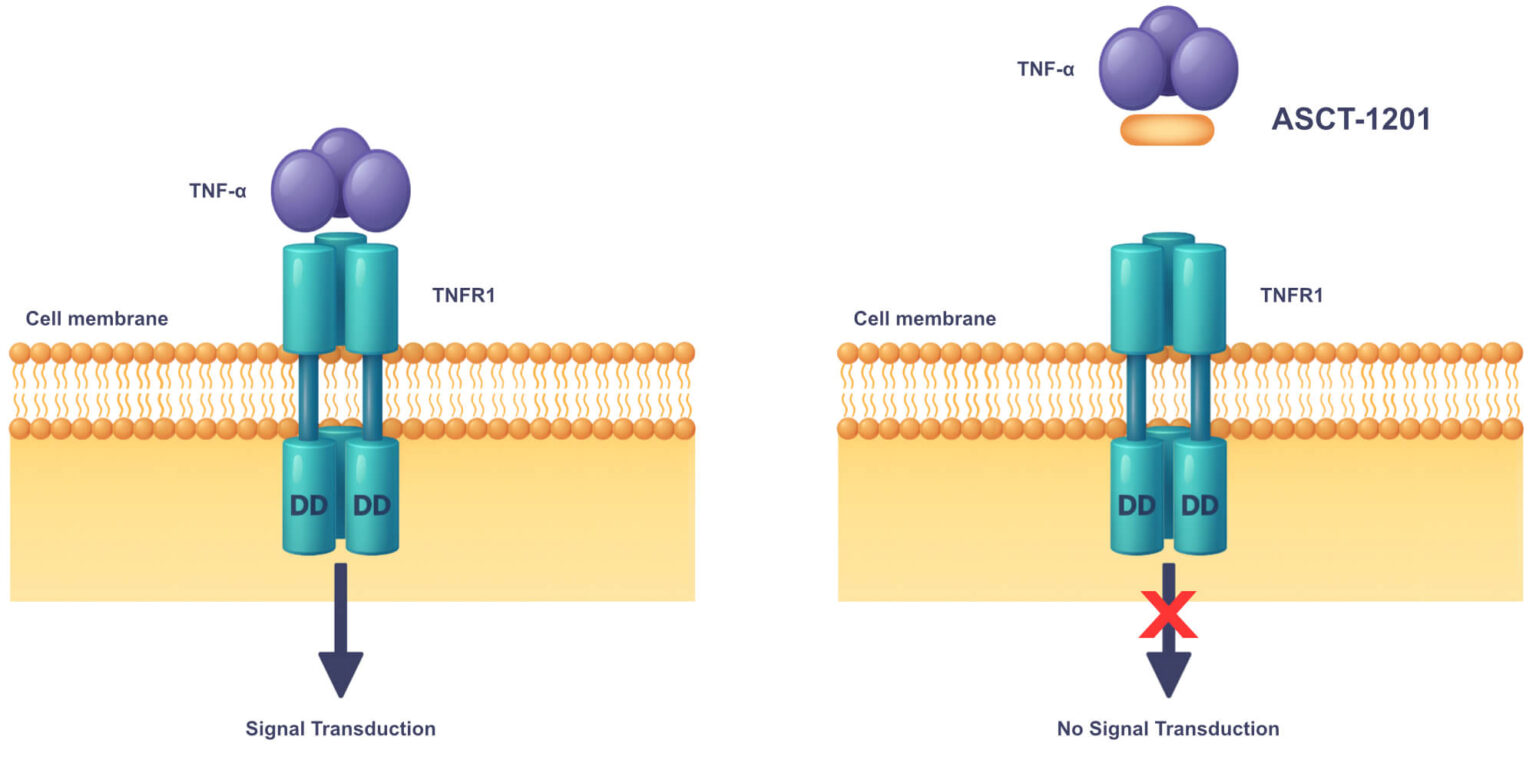
Pathophysiology: In both rheumatoid arthritis (RA) and psoriatic arthritis (PsA), elevated TNF-α in the synovial fluid and tissue causes joint destruction.

ASCT-1201: Refractory Monoarthritis, RA and PsA​

ASCT-1201 is a once-monthly intra-articular (IA) injection that treats only the inflamed joint, eliminating systemic immunosuppression.​

Low nanomolar affinity with no off-target activity.

>40% Reduction in TNF-α signaling in a reporter assay, confirming potent target engagement.​

12 hours post dose​

Model: TNF reporter strain