Partnering

Expanding the Horizon: Partner with Alcamena​

Asset Partnership: Beyond ASCT-83, our robust pipeline includes promising pre-clinical assets targeting severe dermatological conditions and autoimmune diseases, such as ASCT-1124 and ASCT- 1201. We are actively seeking strategic partnerships to accelerate the development and impact of our Supernatural Peptides™ across a broad range of therapeutic areas.

ASCT-1124​ASCT-1201​

Personalized Medicine / De Novo Drug Development Partnership: We will partner with you to develop a novel drug for any target. This program is ideally suited for personalized medicine projects to address life threatening health conditions, that require a rapid therapeutic response. ​

Flexible Partnerships to Accelerate Breakthrough Therapeutics​

Target Discovery → Supernatural PeptidesTM → Clinical Development​

Target
Identification

Hit
Discovery

Lead
Optimization

Lead
Validation

Clinical
Development

Partnering Opportunities:​

Developing drugs for previously undruggable targets.

Collaborate on hit generation​

Bring early hits for optimization (e.g., blood brain barrier, nuclear localization)​

Alcamena offers:

Accelerated IND acceptance​

Optimized asset licensing​

Co-development into the clinic

Rapidly advance new medicines into the clinic - together​

Goal: 1-3 Years​ 

Well-Validated Previously Undruggable Drug Target
Establishing Clinical Efficacy​
Large Pharma Acquisition, Licensing, or Partnership Deal​

Project Example: Personalized Therapeutic Development

Developing a Single-Patient Phase 1/2 Study in One Year​

Develop a personalized therapeutic for a patient within 12 months, leveraging Alcamena’s Supernatural Peptides™.

Personalized Workflow:

Target Identification: Sequence patient to identify unique protein targets (1–2 months)

Peptide Design: Use PepFusion™ and PepSelect™ and PepGenesis™ for rapid peptide optimization (3–5 months)

Scale up manufacture and dose range-finding studies: (6–8 months)

Nonclinical & Regulatory: Conduct nonclinical tox and single-patient IND

Executive Summary​

Why Partner with Alcamena?

Uses cutting-edge GenAI, directed evolution, and synthetic biology to develop a powerful new drug class for universal druggability.

Experienced team

Speed to the Clinic

Flexible Model / Joint development programs

The goal is not just about finding new binders. Instead, it is about rapidly evolving leads into potent, tissue-targeted, and translation-read medicines.

Differentiation

End-to-end platform

Intracellular targeting​

Unlocking undruggable targets​

Unparallel stability

Natural peptide composition​

Rapid lead evolution “months, not years”​

Validated Platform​

Demonstrated access to undruggable targets

Demonstrated high stability

Demonstrated accelerated IND approval

$17M in contracts since 2018

2 case studies

ASCT-1124: An IL-6 antagonist delivery, targeting inflammatory skin diseases.

ASCT-83: A first-in-class CTDSP1:REST antagonist compelling data across obesity, neurodegeneration, and neuropathic pain.

Let’s Unlock the Therapeutic Potential of Supernatural Peptides™ — Together​

Partner With Us

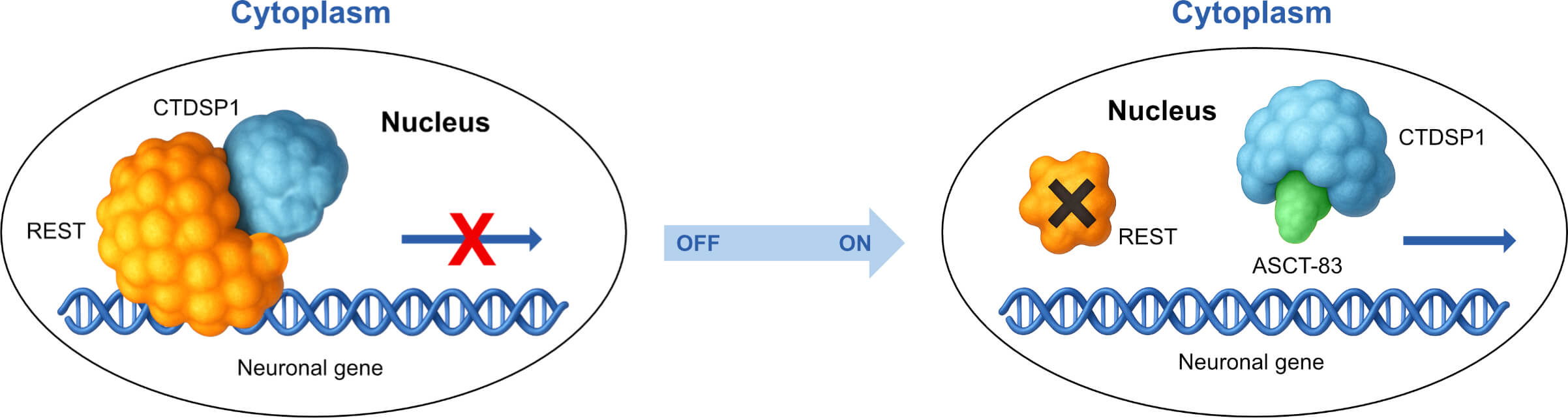
ASCT-83 (CTDSP1:REST Antagonist)

CTDSP1: C-terminal domain small phosphatase 1; REST: RE1 silencing transcription factor

ASCT-83 is a clinical stage first-in-class drug that antagonizes CTDSP1 and REST, which repress neuronal genes1. Prior to ASCT-83, CTDSP1 and REST were considered undruggable because they lack adequate binding pockets for small molecules and are localized in the nucleus, making them inaccessible to antibodies. CTDSP1 and REST are absent or only express at low levels in neurons and pancreatic beta cells (functionally similar to neurons). However, sugary and processed foods, or nerve injury can result in excessive expression in these tissues. High expression levels cause dysglycemia, neuropathy, and in the case in traumatic nerve and brain injury, an incomplete recovery. Additionally, brain cancers, like glioblastoma, have high CTDSP1 and REST levels. The published literature and our data strongly support that antagonizing CTDSP1 and REST improves the outcome of metabolic disorders, nerve injury, and brain cancer2-7.

Important for safety, most REST targets are transcriptionally unresponsive, because the basal organization of chromatin does not permit the epigenetic “writing” of a new set of instructions. However, ASCT-83 mediated-interference of REST chromatin binding in injured or diseased cells permits the re-establishment of durable chromatin state, restoring normal gene expression, thereby addressing the underlying cause of metabolic and/or neurologic symptoms, with a low potential for side effects.

Alcamena has received a “may proceed” letter from the Food and Drug Administration (FDA) to conduct a single and multiple ascending dose study in health human subjects to assess the tolerability and pharmacokinetics of ASCT-83 following daily subcutaneous administration.

Scientific references:

  1. Nesti, E., Corson, G. M., McCleskey, M., Oyer, J. A. & Mandel, G. C-terminal domain small phosphatase 1 and MAP kinase reciprocally control REST stability and neuronal differentiation. Proc Natl Acad Sci U S A 111, E3929-3936 (2014). https://doi.org/10.1073/pnas.1414770111 [pii]10.1073/pnas.1414770111
  2. Uchida, H., Ma, L. & Ueda, H. Epigenetic Gene Silencing Underlies C-Fiber Dysfunctions in Neuropathic Pain. Journal of Neuroscience 30, 4806-4814 (2010). https://doi.org/10.1523/JNEUROSCI.5541-09.2010
  3. Zhang, F. et al. Repressor element 1-silencing transcription factor drives the development of chronic pain states. Pain (2019). https://doi.org/10.1097/j.pain.0000000000001633
  4. Zhang, J., Chen, S. R., Chen, H. & Pan, H. L. RE1-silencing transcription factor controls the acute-to-chronic neuropathic pain transition and Chrm2 receptor gene expression in primary sensory neurons. J Biol Chem 293, 19078-19091 (2018). https://doi.org/10.1074/jbc.RA118.005846
  5. Ueda, H. et al. A mimetic of the mSin3-binding helix of NRSF/REST ameliorates abnormal pain behavior in chronic pain models. Bioorg Med Chem Lett 27, 4705-4709 (2017). https://doi.org/10.1016/j.bmcl.2017.09.006
  6. Conti, L. et al. REST controls self-renewal and tumorigenic competence of human glioblastoma cells. PLoS One 7, e38486 (2012). https://doi.org/10.1371/journal.pone.0038486
  7. Zhang, Y. et al. Comprehensive Analysis of REST/NRSF Gene in Glioma and Its ceRNA Network Identification. Front Med (Lausanne) 8, 739624 (2021). https://doi.org/10.3389/fmed.2021.739624
  8. Martin, D. & Grapin-Botton, A. The Importance of REST for Development and Function of Beta Cells. Front Cell Dev Biol 5, 12 (2017). https://doi.org/10.3389/fcell.2017.00012

ASCT-83 for Obesity & Early T2D​

We target the CTDSP1:REST pathway to unlock the body’s production of BDNF, a potent natural appetite suppressant9, 10.

Obesity & Early T2D​

Appetite Suppressant / Weight loss​
Up to 3x BDNF
28% appetite
9% weight
BDNF 72 h / appetite & weight 1-month​
Model: BDNF human mesenchymal stem cells / appetite & weight in GLP dog study (daily SC administration at human relevant doses) ​

Scientific references:

  1. Xu, B. et al. Brain-derived neurotrophic factor regulates energy balance downstream of melanocortin-4 receptor. Nat Neurosci 6, 736-742 (2003). https://doi.org/10.1038/nn1073
  2. Zuccato, C. et al. Huntingtin interacts with REST/NRSF to modulate the transcription of NRSE-controlled neuronal genes. Nat Genet 35, 76-83 (2003). https://doi.org/10.1038/ng1219​

Treating the Root Cause of Nerve Injury​

Current treatments fail to address the underlying injury-induced repression of neuronal genes by the CTDSP1:REST pathway11-14. ASCT-83 is designed to reverse this repression.​

Neuropathic Pain​

Rapid Pain Reduction​
Up to 70%
In just 1 Week​
Model: Rat spared nerve injury (mechanical & thermal pain)​

Peripheral Nerve Injury​

Motor Function Recovery​
Full Recovery​
In 4 Weeks​
Model: Rat sciatic nerve transection (restored from 40% deficit) ​

Scientific references:

  1. Uchida, H., Ma, L. & Ueda, H. Epigenetic Gene Silencing Underlies C-Fiber Dysfunctions in Neuropathic Pain. Journal of Neuroscience 30, 4806-4814 (2010). https://doi.org/10.1523/JNEUROSCI.5541-09.2010​
  2. Ueda, H. et al. A mimetic of the mSin3-binding helix of NRSF/REST ameliorates abnormal pain behavior in chronic pain models. Bioorg Med Chem Lett 27, 4705-4709 (2017). https://doi.org/10.1016/j.bmcl.2017.09.006​
  3. Zhang, J., Chen, S. R., Chen, H. & Pan, H. L. RE1-silencing transcription factor controls the acute-to-chronic neuropathic pain transition and Chrm2 receptor gene expression in primary sensory neurons. J Biol Chem 293, 19078-19091 (2018). https://doi.org/10.1074/jbc.RA118.005846​
  4. Xiao-Die, X. et al. Increased NRSF/REST in anterior cingulate cortex contributes to diabetes-related neuropathic pain. Biochem Biophys Res Commun 527, 785-790 (2020). https://doi.org/10.1016/j.bbrc.2020.04.106

ASCT-83 for Ischemic Stroke and Traumatic Brain injury (TBI)​

Blocking REST after injury is neuroprotective, prevents brain death, and improves cognitive function​15-19.

Ischemic Stroke & TBI​

60% less brain death
2x anxiety
2x cognitive function​
Brain death at 24 h; anxiety and cognitive function after two weeks of daily treatment at clinically relevant doses followed by a two-week dose free period.​
Model: ​ Brain death assessed in cultured hippocampi glutamate excitotoxicity assay; ​
 anxiety and cognitive function assessed in a controlled cortical impact rat TBI study​

Scientific references:

  1. Noh, K. M. et al. Repressor element-1 silencing transcription factor (REST)-dependent epigenetic remodeling is critical to ischemia-induced neuronal death. Proc Natl Acad Sci U S A 109, E962-971 (2012). https://doi.org/1121568109 [pii]10.1073/pnas.1121568109​
  2. Calderone, A. et al. Ischemic insults derepress the gene silencer REST in neurons destined to die. J Neurosci 23, 2112-2121 (2003). https://doi.org/23/6/2112 [pii]​
  3. Morris-Blanco, K. C. et al. Inhibition of the Epigenetic Regulator REST Ameliorates Ischemic Brain Injury. Mol Neurobiol 56, 2542-2550 (2019). https://doi.org/10.1007/s12035-018-1254-y​
  4. Cheng, Y. et al. Transcription factor network analysis identifies REST/NRSF as an intrinsic regulator of CNS regeneration in mice. Nat Commun 13, 4418 (2022). https://doi.org/10.1038/s41467-022-31960-7​
  5. Liang, H. M. et al. By up-regulating mu- and delta-opioid receptors, neuron-restrictive silencer factor knockdown promotes neurological recovery after ischemia. Oncotarget 8, 101012-101025 (2017). https://doi.org/10.18632/oncotarget.18195

ASCT-83 for Huntington’s Disease​

ASCT-83 reverses the repression of neuronal genes by blocking REST, allowing them to express normally in Huntington’s disease20.
ASCT-83 eliminates nuclear REST​
48 hours post dose​
Model: HEK293 cells administered 500 to 1000 nM of ASCT-83 ​

Scientific references:

  1. Zuccato, C. et al. Widespread disruption of repressor element-1 silencing transcription factor/neuron-restrictive silencer factor occupancy at its target genes in Huntington’s disease. J Neurosci 27, 6972-6983 (2007). https://doi.org/10.1523/JNEUROSCI.4278-06.2007

ASCT-83 for Brain Cancer ​

In brain cancers REST acts as an oncogene by driving cancer progression1. Blocking REST induces cancer cell death and prevents cancer proliferation and migration21.
ASCT-83 kills glioblastoma cells (GBM)
ASCT-83 alone: 85% GBM cell death
ASCT-83 + Temozolomide (TMZ): 100% GBM cell death
ASCT-83 + TMZ: 75% TMZ resistant GBM cell death
Over 4 to 7 weeks​
Model: GBM U87 and GBM temozolomide resistant U251 cells using clinically relevant doses​

Scientific references:

  1. Kamal, M. M. et al. REST regulates oncogenic properties of glioblastoma stem cells. Stem Cells 30, 405-414 (2012). https://doi.org/10.1002/stem.1020
  2. Conti, L. et al. REST controls self-renewal and tumorigenic competence of human glioblastoma cells. PLoS One 7, e38486 (2012). https://doi.org/10.1371/journal.pone.0038486

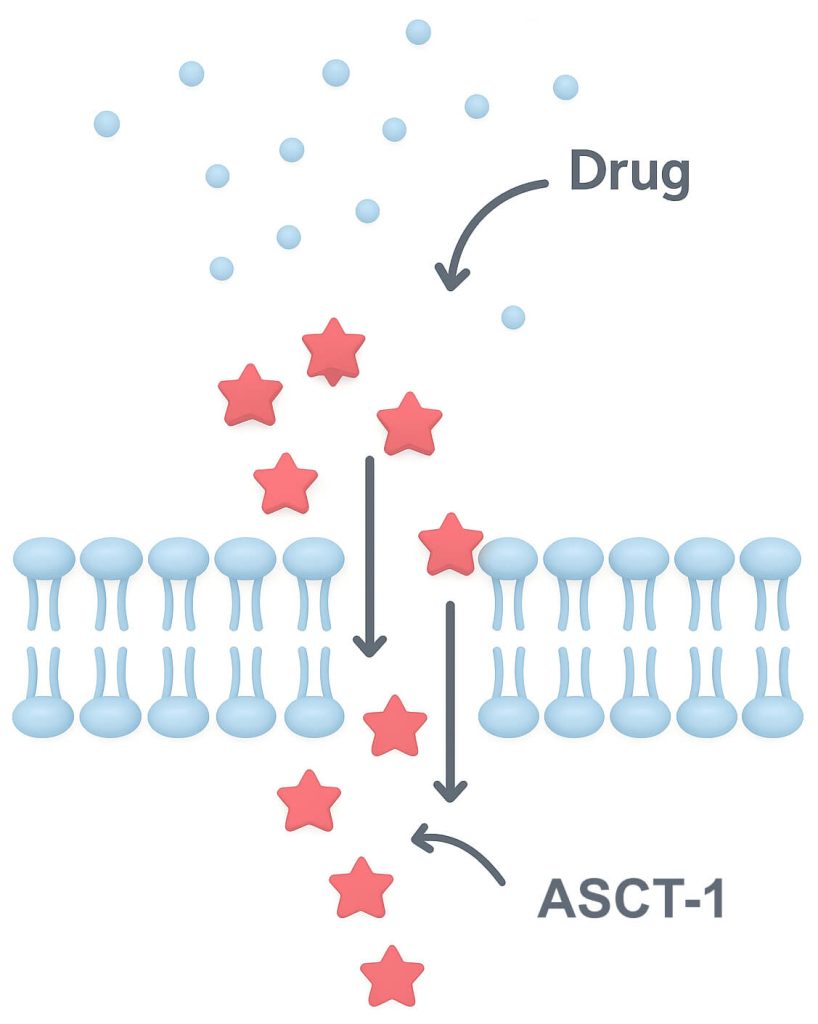
ASCT-1 (Permeability Enhancer)

ASCT-1 (Permeability Enhancer)

Mechanism: ASCT-1 is engineered to optimize the delivery of small molecules, peptides, antibodies and oligonucleotides.

With high membrane affinity and efficient membrane permeability, it acts as a “molecular doorman”,  facilitating transmembrane passage and improving systemic uptake.

ASCT-1 is designed to improve drug cell and nuclear permeability and overall bioavailability.​

ASCT-1 enhanced antagonist (ASCT-456) efficacy against its nuclear-localized target REST: ​

Increased ASCT-456 REST antagonist activity from 64% to 100%

Increases ASCT-456-induced U87 GBM cell death from 63% to 100%.

Increases ASCT-456-induced U251-TMZ resistant GBM cell death from 0 to 76%

ASCT-1 exhibits no off-target effect on its own.​

48 hours post dose​
Model: HEK293, U87, and U256 cells using clinically relevant doses. ​

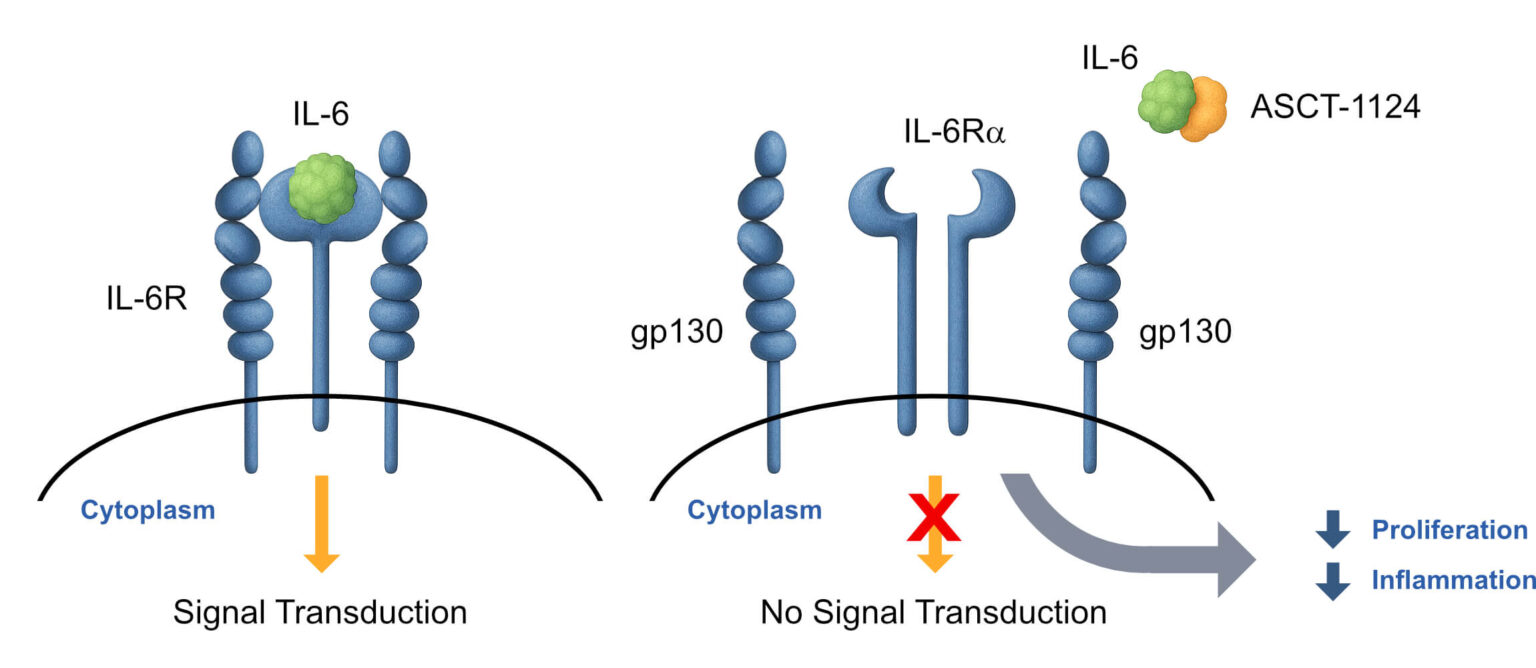
ASCT-1124 (IL-6 Antagonist)

Mechanism: A first-in-class topical peptide that binds directly to IL-6, blocking proliferation and inflammation signals. This offers a localized treatment, minimizing systemic side effects.​

ASCT-1124: Reduction and Prevention of Keloid / Hypertrophic Scars ​

ASCT-1124 is a topical peptide that delivers biologic-level potency directly only to the disease site, avoiding systemic toxicity.​

ASCT-1124 dose-dependently decreases proliferation of skin cells (keratinocytes) from 140% with IL-6 alone to zero in the presence of ASCT-1124.

40% reduction in skin thickness, 60% reduction in serum IL-6, and 75% reduction in serum IFN-γ in a humanized IMQ mouse model.​

Keratinocytes 12 hours post dose; humanized mice every 12 hours for 7 days.​
Model: Keratinocytes and imiquimod (IMQ)-induced humanize mouse model using clinically relevant doses. ​

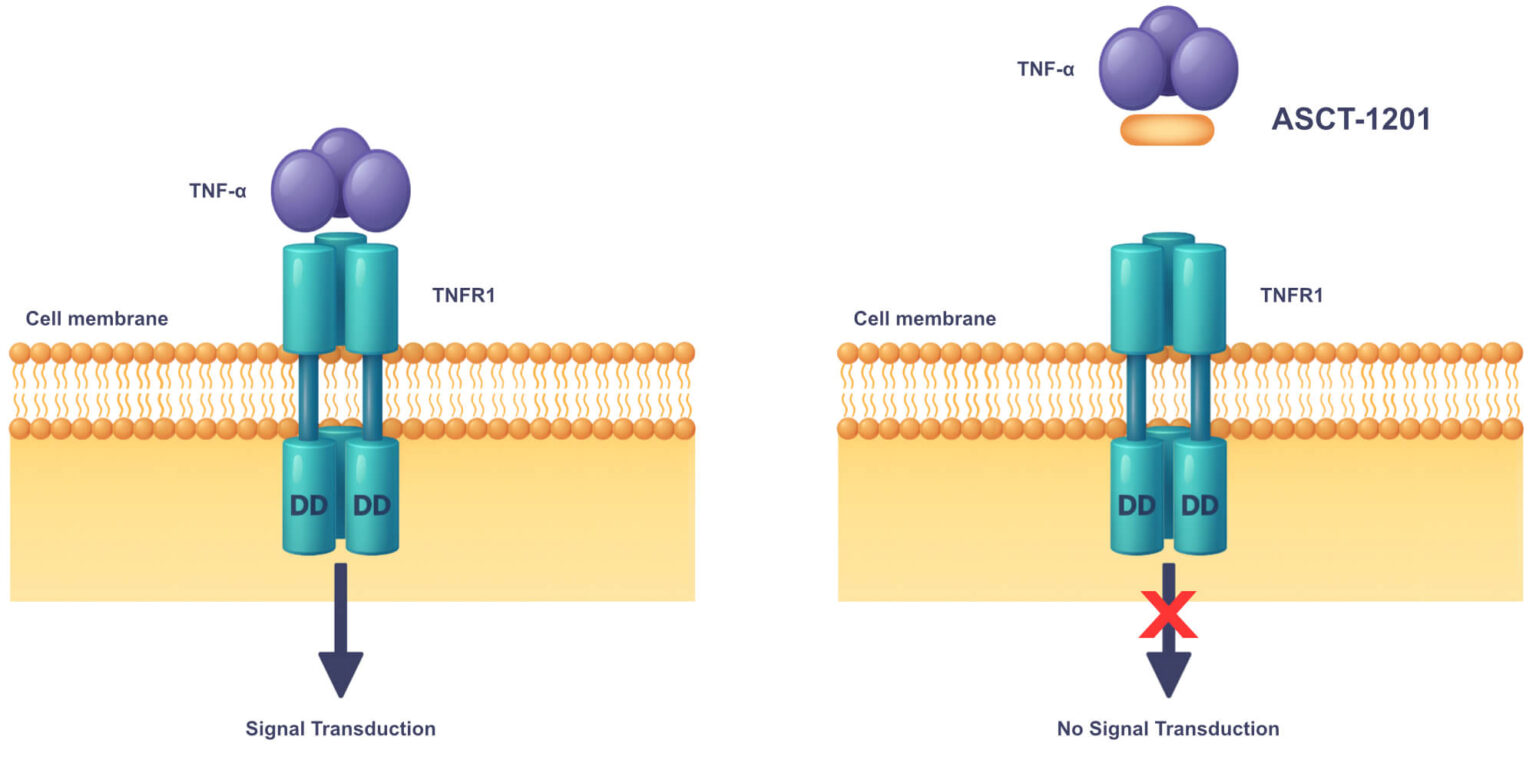
ASCT-1201 (TNF-α Antagonist)

Pathophysiology: In both rheumatoid arthritis (RA) and psoriatic arthritis (PsA), elevated TNF-α in the synovial fluid and tissue causes joint destruction.

ASCT-1201: Refractory Monoarthritis, RA and PsA​

ASCT-1201 is a once-monthly intra-articular (IA) injection that treats only the inflamed joint, eliminating systemic immunosuppression.​

Low nanomolar affinity with no off-target activity.

>40% Reduction in TNF-α signaling in a reporter assay, confirming potent target engagement.​

12 hours post dose​

Model: TNF reporter strain